
Home Blog Page 51

The Youth Hub Uganda selected as Facebook introduces Community Leadership Programme winners for Africa

0

In line with its focus on bringing people together and supporting the development of connected communities, Facebook has announced the names of 116 people worldwide who have been selected to join the Facebook Community Leadership Program. Around a dozen African community leaders have been selected to become programme residents and fellows.

“Many community leaders worldwide and in Africa turn to Facebook to create connections through Facebook groups, WhatsApp or Messenger,” says Nunu Ntshingila, Regional Director Facebook Africa. “This programme is all about empowering them with the tools, support and funding they need to advance their causes and build their communities.”

Since announcing the programme in February, Facebook received more than 6,000 applications from all over the world. A selection committee, which included employees as well as community experts from outside of Facebook, reviewed each application to identify leaders with a strong, clear and committed vision for their community.

Five participants have been selected globally as community Leaders in Residence, each will be awarded up to $1,000,000 to fund their community initiative. The final amount received will be determined based on the final budget proposal created and submitted by each resident as part of their program training.

Kenya’s Noah Nasiali, the selected leader in residence for Africa, has brought together more than 100,000 farmers across Africa through a Facebook group in less than a year. Farming is one of Africa’s most important industries, and Noah’s community helps farmers obtain and share critical information.

“Africa Farmers Club was formed to help farmers come together to access credible, reliable and applicable farming information that will help them develop their skills and most importantly help them to get a market for their products and in the end get returns for their hard work. I invite group members to share their stories both positive and negative through pictures so that we can learn together.

Whenever possible I personally visit members face-to-face to see for myself their challenges and we discuss how they can overcome and at the same time and improve. Our community aims to contribute to the Sustainable Development Goal which is to End hunger, achieve food security and improved nutrition and promote sustainable agriculture.” Said Nasiali

The programme will also host more than 100 fellows and youth participants who will receive up to $50,000 each to be used for their community initiative.

Savio Lule Mark, The Youth Hub Uganda (Uganda); They provide guidance and to nature Ugandan Youth who use their Art, Music, Fashion and sports to impact positively to their communities. The Youth Hub helps Ugandan youth to realize their skills and talents and develop them to create a greater community and country at large through educating, empowering and inspiring youth and community development.

The Others include;

Felista Wangari, 52-Week Savings Challenge (Kenya)
Pamellah Oduor, Let’s Cook Kenyan Meals (Kenya)
Asha Mweru, #WomenWorkKE (Kenya)
Caroline Kihusa, Still A Mum (Kenya)
Truphosah Monah, Women And Realities of Disability Society (Kenya)
Anike Lawal, Mamalette (Nigeria)
Mamadou Sy, Docteur Nakamou (Senegal)
Gabriel Hoosain Khan, LGBTI community, Human Rights (South Africa)
Lusanda Magwape, Dream Factory Foundation (South Africa)
Nadine Maselle. Salt River High Tutoring (South Africa)

“Our group of African fellows and our resident represent diverse perspectives from different parts of the continent, but they share a common goal of helping their communities thrive. We know they will do great things over the next year and we’re excited to get them started,” says Ime Archibong, Vice President, Product Partnerships at Facebook.

FlatPyramid Review: The Ultimate Source For 3D Models

0
Flat Pyramid

3D modeling plays an important role in the life of modern society. Today it is widely used in marketing, architectural design and cinematography and don’t forget the industry. 3D modeling allows creating a prototype of a future structure, a commercial product in a volumetric format. 3D modeling plays an important role in the presentation and demonstration of a product or service.

3D modeling is the design of a 3D model according to a pre-designed drawing or sketch. Special software and hardware devices like computers, tablets and office equipment are used to build a volumetric model of the object. In the simulation, an important step is rendering – converting the rough variation of the model into an eye-pleasing format.

Modern 3D computer graphics allows you to create the most realistic model of the object, which can be difficult to distinguish from the usual picture. Professionally modeled presentation allows to demonstrate a product or service to a high level to potential clients, partners, investors.

3D modeling is some kind of art so it takes a lot of time and effort to create really good looking models. Sometimes people or the whole businesses needs a 3D model and need it fast. That where the 3D model marketplaces become handy. Such marketplaces connect 3D artists and buyers together and there are many of them. One of the top is Flatpyramid.

FlatPyramid is one of the oldest 3D model marketplaces globally with 5000 users and over 10,000 3D models for gaming, virtual/augmented reality, computer graphics. On FlatPyramid, 3D artists, design studios and businesses sell and share their models. All customers can easily choose from a huge collection of high-quality 3D models, using different filters and categories. These models can be used in different projects to save the development time and money. Customers can also order custom 3D models at FlatPyramid.

FlatPyramid gives all 3D artists the opportunity to showcase their work and get the valuable feedback from the large community and interact with other 3D artists. The marketplace allows designers to directly communicate with customers and earn the royalties. Our marketplace also help professionals to generate business leads and increase awareness about them.

FlatPyramid’s Proprietary Algorithm reads 3D data from multiple sources, normalizes and optimizes it so that the resulting 3d model files are converted/translated and minified to a file format that works for applications in high growth industries like Gaming, Animation, 3D Printing, Augmented Reality, and Virtual Reality applications.

WHERE 3D MODELING IS USED TODAY

  • Different models of characters. Usually this is used during cartoons creation and during the design of computer video games.
  • 3D visualization of buildings. This important for design agencies, they are representing future buildings to clients in 3D.
  • 3D models of interior items. In most cases, they are performed by design companies in order to demonstrate the aesthetic properties of the future interior.
  • Advertising and marketing. Often, non-standard objects for advertising are required. Three-dimensional graphics plays an important role during service demonstration. This allows you to make a more effective impression on the stakeholders.
  • Exclusive ornaments manufacturing. Professional artists and jewelers use special programs that allow you to create an original and unique sketch.
  • Manufacture of furniture and components. Production furniture companies often use the development of a 3D model for placing their products in electronic catalogs.
  • Industrial sphere. Modern production can not be imagined without modeling the company’s product. Each detail or a full-fledged object is easier to compile on a finished and thought-out 3D model.
  • Medical sphere. For example, during plastic surgery or surgical intervention, more and more often 3D graphics are used to clearly demonstrate to the patient how the procedure will be performed and what will be the result.

3D modeling, animation and visualization of objects plays an important role in the modern world in the implementation of various business processes and successful interaction with the customer. Interesting, that you can find all the necessary 3D models on Flatpyramid for all highlighted spheres above.


Instagram Founders Resign Because of Facebook

0
Instagram Founders Taking A Selfie - (Photo Credit: TechCrunch)

The two founders of Instagram, Kevin Systrom and Mike Krieger, have released a statement on the Instagram blog page that they plan to resign from their company, 6 years after they created the most popular photo app. The app was created in 2010, and later sold to Facebook, with the duo at the management of the company.

In a statement on the instagram blog page, the Chief Executive Officer,  Systrom said,

“We’re planning on taking some time off to explore our curiosity and creativity again. Building new things requires that we step back, understand what inspires us and match that with what the world needs”

According to a BBC news radio podcast, Instagram was very popular because it was not Facebook.

Get more instagram followers for free

Many people have over the years been disappointed by the way Facebook treats user data, and issues of privacy of its users. The two are rumoured to have had internal disputes with the Facebook billionaire.

For the same reason, the founders of Whatsapp which was also acquired by Facebook quit the company.

The fate of the company is unclear, and neither is reaction of users who might worry what Facebook has been doing or is going to do with their personal data.

“We look forward to watching what these innovative and extraordinary companies do next” he said in the statement.

In response, Mark Zuckerberg commented on twitter about their departure.

“I wish them all the best and I’m looking forward to seeing what they build next” the tweet reads.

Uganda Ranked 1st in Africa in the National Cyber Security Index

0

On September 21, 2018, the Estonian think tank and company, the E-Governance Academy Foundation Company ranked Uganda number 1 in Africa in the National Cyber Security Index, with an index of 49.35.

The index is a global study covering up to 109 states that are included in the study. Uganda globally took the 40 positions, ahead of Mauritius that came in number 43 globally, and 2 in Africa, Nigeria at 45, 3 in Africa. Uganda was ahead of a number of other developed countries including Israel at number 42, Iceland 44, China 62 and South Africa at number 75.

The study revealed areas where Uganda has performed very well with 50% and above earned, while other areas revealed underperformance where the Ugandans and government should respond in order to improve the cybersecurity of the nation.
Good performance was recorded in cyber threat analysis and information at 80%, protection of digital services stood 80%, the education and professional development at 78%, de-identification and trust services 67%, cyber incident response, fight against cybercrime, and protection of essential services all standing at 50%.

Worst performance that led to decline in global rankings was in the development of cybersecurity policy at 29%, protection of personal data 25%, contribution to global security stood at 17%, cyber crisis management and military cyber operations all standing at 0%. The rankings somewhat indicate how to secure internet usage is in the country, building more trust in the endeavours of the government to improve cybersecurity in the country.

NSSF rolls out new Upgraded NSSFGo App; set to receive contributions, instantly register new members

0

The National Social Security Fund has upgraded their Mobile Application dubbed NSSFGO App to include access to more self – services and improve customer experience. Some of the new features added include contributions payments for voluntary savers and employers whose payments are less than shs4m monthly, member contacts update, retirement benefits projections, employment history, e-statement and direct contact to Relationship Manager.

Addressing media and selected members at Café Javas, Patrick Ayota, the Deputy Managing Director, said that the app was an affirmation of the Fund’s commitment to transparency to its members by giving them access to monitor their NSSF accounts anytime, anywhere.

“Our plan is to improve our business processes to make them more efficient & convenient to members through innovations by 2025. The new app not only increases efficiency and service delivery to our customers but also puts the power and control of their money in their hands” he said.

The upgraded app also gives members an opportunity to track their savings in a more detailed way and hold their employers accountable regarding their contributions.

“We expect to increase the compliance levels now that members are able to access more details of their account statement easily, like when last contributions were made, how much they received in a particular month, total contributions made by each of their employers including the first and current ones,” Ayota said.

In the future, more features will be added to the app to include both member and employer registrations without having to NSSF offices. This will be through partnerships with the National Identification and Registration Authority (NIRA) and Uganda Registration Services Bureau. In addition, eligible members will be able to initiate their benefits claims and track progress using the NSSF Go app.

The NSSF Go App is part of a variety of electronic channels the Fund introduced to improve its service delivery. Other e-services channels include; The E-collections portal that allows employers to remit their employees’ contributions directly to their NSSF accounts through the Bank, within 24 hours, Mobile money payment platform, NSSF Payway and SMS alerts.

This is a Press Release From NSSF Uganda

Whatsapp will no longer be supported on iPhone 4 and other smartphones

0

WhatsApp has dropped support for a great number of smartphones on the market after the company raised the threshold operating software that would support the service. The company has released a new update version 2.18.90 which has introduced all these changes and made the software not supportable on a number of devices.

On its website, WhatsApp updated its FAQ page mentioning that “WhatsApp for iPhone requires iOS 8 or later.”

This leaves out all iPhones that are running a lower iOS 7, and 6. The affected devices that run the iOS 7 include iPhone 4. Devices running a lower iOS are no longer supported too.

The world’s most popular messaging service, however, gives a grace period, until which the affected devices will support WhatsApp. This grace period is not available for iOS 6 gadgets that are completely no longer supported.

“If WhatsApp is currently active on your iOS 7.1.2 device, you will be able to use it until February 1, 2020” reads the update.  This means that only those who have the application installed and are using the service with iOS 7, can continue to use the service. However, you cannot create new WhatsApp accounts or reverify an existing account.

The company encourages iPhone users to upgrade to the later version of iOS. However, Apple itself no longer updates iPhone 4 software, implying that those using the devices are condemned to purchase a later version of iPhones.

It seems iPhone 5 that uses iOS 7 can still is upgradable to iOS. Users can, therefore, seize the moment, and upgrade to iOS 8. iPhone 4S is also upgradable to iOS 8. For the android phones, all phones with Android 2.3.7 are no longer supported starting 1st February 2020.

Women only taxi-hailing App, An-Nisa launched in Kenya

0

A taxi-hailing app specially designed for women called An-Nisa has been unveiled in Nairobi, Kenya. An-Nisa was launched to empower women taxi drivers, with the company taking only a 10 per cent share from a trip.

Founder, Mehnaz Sarwar noted that the platform is for female drivers in a male-dominated area and that they were launching with 60 female drivers who would operate everywhere in the major towns.

“It is a source of empowerment for those ladies and at the same time, it makes a safer option for women who are not comfortable being driven by men, maybe for religious reasons or safety concerns,” she said.

An-Nisa is an Arabic word which means; for women, Mehnaz Sarwar did not rule out extending the services to men in the future. “As we go along, we will put in the option if the need arises.

For now, it is women and children,” she said. “We are only taking ten per cent. The benefit has to purely go to women. These are single mothers,” Sarwar said. 

According to her, she has that invested a capital of about Sh1 million into the venture, noting that bringing together all the female drivers was a key challenge.

Original Blog via Tech Gist Africa

MTN Uganda and Mastercard launches MTN MoMoCard in a bid to diversify Mobile Money services in Uganda

0

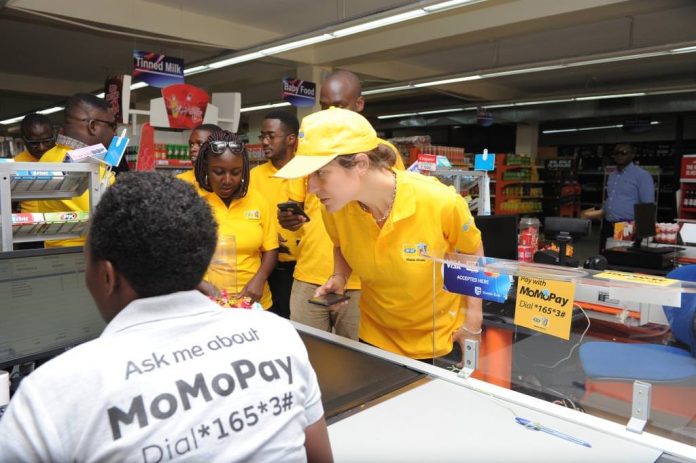
MTN Uganda in partnership with Mastercard and United Bank for Africa (UBA) have announced a new service that will enable quicker, safer and more convenient online payments globally.  Through this partnership, MTN MoMo customers will use a virtual card to shop or make payments at the vast network of global outlets accepting Mastercard payments.  

The launch of the virtual card that is known as MTN MoMocard will ensure MTN’s ability to provide its customers access to products and services previously a preserve of physical credit card holders while diversifying its mobile money portfolio. Additionally, the partnership will result in a wide range of cutting-edge digital payment solutions being introduced in Uganda.

MTN MoMo is helping to connect more Ugandans to new forms of commerce,” said Wim Vanhelleputte, Chief Executive Officer, MTN Uganda. “Our affordable mobile financial services are positively impacting communities and lifestyles in Uganda. This is evidenced by the phenomenal growth in both the number of customers and volume of transactions over the years,” he added.

Like a debit card that is linked to a bank account, the MTN MoMocard is linked to a customer’s MTN MoMo account but is accessible on any type of mobile phone. All a customer has to do is dial 165*70# and follow the instructions.

The MTN MoMocard can be used on any merchant platform that accepts Mastercard – locally and globally. Consumers that travel frequently for business or leisure, or those that shop online will enjoy the convenience of the easy-to-use solution.

Ngozi Megwa, Vice President Market Development, Sub-Saharan Africa, Mastercard said, “Besides the ability to connect more consumers to a solution that enables them to pay without cash, the virtual card also supports the growth of e-commerce in Africa and supports businesses who want to appeal to a wider audience. Digital payments is shaping commerce, the backbone of any economy. We are excited about the MTN partnership and its ability to connect us with an audience hungry for innovation.”

The MTN MoMocard is powered by United Bank for Africa, whichfacilitates the payment transactions online, both locally and internationally.

UBA is excited to be the bank partner with Mastercard and MTN on this milestone project that not only enhances convenience for mobile money customers but also the utility of the service. The bank recognises the role of technology in enhancing financial services delivery and welcomes future similar partnerships,” said Johnson Agoreyo, the UBA Managing Director/Chief Executive Officer.

This is a Press Release From MTN Uganda

National Broadband Strategy for Uganda rolled out; Here’s all you need to Know about it

0

The Minister of ICT & National Guidance, Hon Frank Tumwebaze, on Tuesday officially launched the new National Broadband Strategy for Uganda (2016-2020) that was approved by the cabinet. The strategy describes broadband as an “interconnected multi-layered ecosystem of high capacity communications, network services, applications,  devices and users”.

It regulates the network space that telecommunication companies tap in, to be able to provide services to people. In the context of Uganda, the policy defines broadband as “a robust connectivity that is affordable, always on and delivers a minimum of 3mps to the users for applications, content and services”.

Some of the deliberations and resolutions from the cabinet towards the Policy stipulate that;

To make it simpler,  it is internet access via wireless networks such as Wi-Fi, 3G and 4G, among other advanced connections.

To achieve Uganda’s vision 2040, the government identified ICT as an area that would enhance improved service delivery, create employment and wealth.

Broadband was also identified as that area of ICT, that needed focus.

The vision of the strategy is “A transformed middle-income economy, driven by affordable high-quality broadband connectivity”.

The strategy is centred around 5 areas including (1) infrastructure, connectivity, and devices (2) content, applications, and innovation (3) capacity building, and awareness creation (4) policy, legal regulatory environment and (5) finance and investment.

Some of the targets for the new policy by the year 2020, is that the minimum broadband speed will be 3mps, a broadband penetration of 50% for rural areas, and 100% for the urban centres. In the areas of district and sub-county headquarters, health centres IVs, tertiary institutions and secondary schools, broadband connectivity should be at 100%.

These are intended so that access of the telecommunications services is enjoyed by the majority of Uganda’s in every geographical space within the country.

Regarding the costs of broadband, the cost of Mbps should be reduced by 10%. It also mentions that 40% of Uganda’s population should be digitally literate, and at least 50% of Uganda’s registered business to be online.

The policy is the reason why the government has now made it a requirement for telecommunications to list in the stock exchange so that Ugandans can be able to have an ownership stake in the companies in order for influence and improve service delivery. These are some of the conditions MTN has been given if it’s licence is to be renewed.  MTN was also ordered to allow customers to retain their sim cards and numbers when one decides to change a network operator or geographical location.

John Kamara Interview: How Africa has embraced Blockchain Technology

0

What kind of solutions can blockchain technology offer the continent? Is Africa on the road to becoming a blockchain hub?

Africa is rising and technology is at the forefront of our growth as a continent. We have seen the explosion of the mobile space in the continent and how it has allowed a number of services and solutions to become easier. Blockchain is about to help solve a number of issues we are currently facing in the public and private sector. Pockets of blockchain innovation are fast springing up in innovation hubs across Africa, as the public and private sector alike seek effective new systems of record with trust embedded.

With Kenya, Nigeria, Uganda and South Africa among the countries taking the lead in blockchain experimentation, the financial sector looks set to be the continent’s earliest big adopter. However, development and trials are also underway to apply blockchain technology to virtually every industry sector – from health and social development to retail and agriculture. Governments are exploring ways of using blockchain to aid corruption across multiple verticals and also to push a value to service sectors.

One company planning to maximize blockchain’s potential in Africa is Ecobank, a pan-African banking conglomerate with operations in 36 African countries. Ecobank’s Fintech Challenge actively seeks out fintech innovations harnessing Blockchain, artificial intelligence, machine learning and other next-generation technologies.

Other countries like Kenya and Nigeria have either set up a blockchain committee or advisory programs to explore the opportunity. Some of the happenings in the private sector around blockchain education are also key to use case of the technology, i.e IBM research on blockchain and movement of trade in Africa.  ITEX, a payment solution company servicing multiple POS solutions and software for banks across Africa is exploring blockchain for security and trust.

From my perspective, Africa is looking at blockchain as a solution to solve some of the multiple problems we have, as we pioneer digital payment technologies in Africa as well.

As we move into the African future in technology blockchain represents a perfect decentralized and incorruptible ‘truth engine’ that cannot be hacked growth for payment, SME trade and a number of identity management and transactional problems we have in Africa.

Nairobi and South Africa have implemented crypto-friendly laws and Kenya’s president Uhuru Kenyatta has launched a blockchain and artificial intelligence task force. Do you think other African countries will follow suit?

Yes, more countries will follow and create other types of structures that will work for their economy based on their market need.

Some momentum has been gathered around the use of blockchain in Africa so far and throughout 2018. But what could be unusual is the role that governments and public sector organisations could play in raising its profile further. Typically, the development and application of emerging technologies are championed by the private sector before the public sector tends to take notice. Given that the potential use cases for blockchain align so closely with many public services, this is a technology where the public sector cannot afford to be sitting in the passenger seat.

For example, the Blockchain Association of Uganda was established earlier this year to create a credible vehicle for driving standards for blockchain across industries in Uganda. The membership organisation also aims to make blockchain-related resources available to government and public-sector consumers.

We also see the evolution of the Blockchain centre for excellence positioned to provide education and train young developers on blockchain and how to build solutions that can solve African problems.

Do you foresee any difficulties with the implementation of blockchain systems? There are some concerns about the risk of crypto asset crime, including tax evasion and money laundering.

Bitcoin’s wild skyrocket last year may well have turned the world’s interest on to cryptocurrencies, but in Africa, we “still have a long way to go” before they will be considered a legal tender, and as such are not of major interest. Governments are still struggling with how to manage crypto space and this is affecting the conversation around blockchain. Any decision to buy into a new cryptocurrency would be guided by the same criteria as other investment decisions, with a focus on avoiding the “cloud” created by the crypto buzz.

African Cryptocurrency exchanges – allowing people to trade various digital currencies against African currencies – may present a more valuable prospect in the short term, but overall, he leans away from the crypto proposition in favour of blockchain solutions. These, he says, will be far more attractive investment opportunities:  It will not be as straightforward as it may sound.

A lot of African banks and government-run when they hear the word crypto because of the effect they feel it will have on the economy and also a loss of control. Issues around tax evasion are real and have to be discussed with clarity for us to find a way forward.

What potential does this have to revolutionize the lives of the unbanked, does it represent an opportunity to democratize the economy?

On the private sector side, it is a huge opportunity for the fintech and private sector space. Also, the drive for financial inclusion is one that bodes well for the crypto space in Africa.  We can already see a number of exchanges set up in Africa to take advantage of this growing opportunity.

Just as Africa skipped the early fixed-line telecommunication phases of the 20th century and moved straight on to mobile phone usage, could new blockchain tech provide it with a similar opportunity to bypass inefficient systems and leap into the future?

Yes, 1000% – blockchain is going to revolutionize the way we look at tech and solutions going forward in Africa.  And blockchain on mobile is the next frontier.

There is certainly a lot of buzz around blockchain tech and its potential to bring about change in Africa. In your opinion, is this sense of optimism realistic or are we jumping the gun a bit?

It is optimistic but needs guidance and clarity. It’s also a huge educational opportunity for various private sector companies to create a whole new revenue and income stream. Africa is the land of milk and honey at the moment and blockchain is another form of milk that is going to become huge. Some interesting things happening in blockchain in Africa:

ITEX, one of the top payment solutions in Africa and specifically, Nigeria (over 14 years old), has exposure in over 23 countries throughout Africa and is currently working on an integrated Pan-African settlement platform on the blockchain.

Paxful has announced plans to establish a blockchain incubator hub in Lagos, Nigeria, as well as to run Blockchain and cryptocurrency events in Nigeria, Ghana and Cameroon.

AID: Tech and PharmAccess are harnessing AID: Tech’s blockchain platform to collect and verify digital health data to make antenatal care more effective in Tanzania.

Kenyan real estate firm Land Layby Group plans to use blockchain to store land registry records, eliminating the existing real estate challenges of fraud, double ownership and false documents.

Kenyan startup ‘Nurse in Hand’, has signed a MoU with Apla Tech Company to build a blockchain-based accident and emergency response platform.

Blockchain start-up TariLabs has launched in Johannesburg, South Africa, with the aim of building the open source Tari blockchain protocol. The protocol is being constructed as a platform for the management, trade and use of digital assets, and will be merge-mined with the Monero blockchain.

The South African Reserve Bank (SARB) ran the Project Khokha proof of concept trialling a distributed ledger technology-based wholesale payment system in a ‘real world’ environment. It reported that the typical daily volume of the payments system could be processed in less than two hours with full confidentiality of transactions and settlement.

Jamborow, the Pan African B2B platform for financial inclusion in Africa is also building a blockchain solution to help secure data, transactional information and identity management for her clients in Africa.

These developments prove that the private sector and governments are taking blockchain seriously in the continent. The proof is in the drive of our private companies to explore and deploy funds into blockchain research as well as projects.

LATEST POSTS

Follow GURU8

3,734FansLike
15FollowersFollow
1,046FollowersFollow
19SubscribersSubscribe