
A new submarine cable system is in the works, and it could meaningfully change the connectivity landscape for West Africa and beyond.
A group of major telecoms and digital players have signed a Memorandum of Understanding to launch the Via Africa submarine cable project, a brand-new system designed to link Europe to South Africa along the Atlantic coastline. The signatories include Canalink, GUILAB, International Mauritania Telecom, Orange Group, Orange Côte d’Ivoire, Sonatel, and Silverlinks.
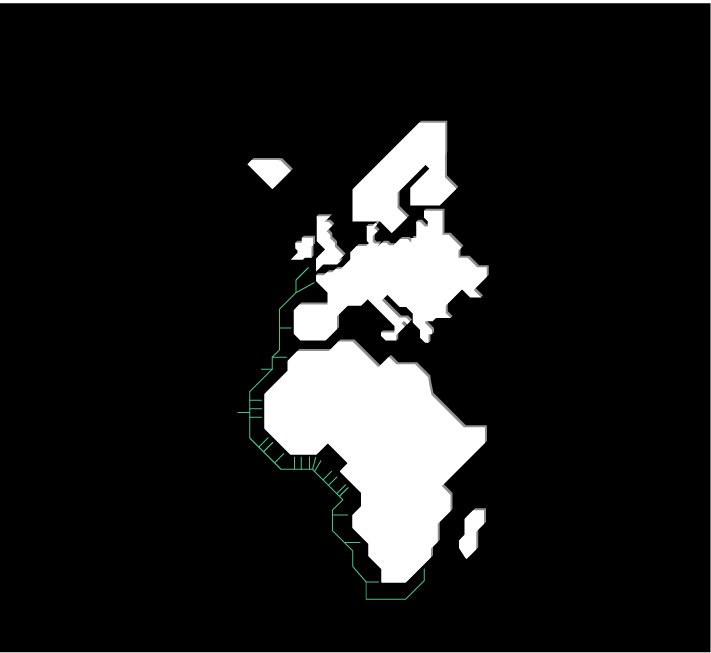
The cable will land in the United Kingdom, France, and Portugal on the European side, then run south along the Atlantic coast touching the Canary Islands, Mauritania, Senegal, Guinea, Côte d’Ivoire, and Nigeria, with extensions planned further south to improve connectivity diversity for countries along the route.
A consortium model that gives partners a real seat at the table
What makes Via Africa different from a typical infrastructure rollout is how it is structured. The system operates as a consortium, meaning each participating partner co-invests in the infrastructure and takes part in its governance. This is not a passive arrangement. Investors have direct input into decisions around the design, deployment, and day-to-day operation of the cable. The consortium has also left the door open for additional partners to join as the project develops.
Why this cable matters for Africa
Much of Africa’s existing international bandwidth runs along routes that are increasingly congested and vulnerable to outages. Via Africa is specifically designed to address that by offering a different subsea path than current infrastructure, adding diversity and resilience to the regional connectivity stack. For West African countries in particular, having an alternative high-capacity route to Europe reduces dependence on a small number of cable systems and strengthens the overall robustness of the region’s internet backbone.
What happens next
The consortium’s first order of business is jointly financing a cable route study to identify the optimal path, balancing resilience, technical feasibility, and economic efficiency. In parallel, the partners are preparing a procurement process to select a cable supplier, which will mark the next major milestone in bringing the system to life.
No launch date has been announced yet, but the signing of the MoU signals that the project has moved from concept to committed action.