
The Android Show 2026 packed more surprises than anyone expected, from AI-powered widgets to a whole new category of laptops.
Google held its second annual Android Show on Tuesday, once again getting ahead of Google I/O by a full week. The logic is the same as last year: there’s simply too much Android news to squeeze into one conference. And honestly, after seeing what was announced, it’s hard to argue with that call.
Here’s everything that came out of the show.
Gemini Intelligence is the new name for Google’s best AI
Google is now branding its most advanced AI features under a single umbrella called Gemini Intelligence. It covers phones, watches, cars, glasses, and laptops, and the pitch is straightforward: your device should be working for you before you even ask it to.
The first wave of features is landing on the latest Google Pixel and Samsung Galaxy devices this summer. One standout capability is task automation across more apps. Google’s demo example was telling Gemini to take a grocery list from your notes app and build a full delivery cart from it, no manual searching required.
Chrome for Android is getting deeper Gemini integration that lets you ask questions and get things done with webpages as context, with the capability arriving in late June. Autofill is also getting an upgrade, with opt-in Gemini Personal Intelligence supporting more types of forms across Chrome and third-party apps.
Gboard is getting a feature called Rambler, which uses Gemini models to clean up your voice input in real time, stripping out filler words, pauses, and self-corrections so your message actually says what you meant to say.
Perhaps the most visually exciting addition is generative UI. Android is getting the ability to create custom homescreen widgets and Wear OS Tiles populated by information from the web and your Google apps. You describe what you want, and Gemini builds it.
Googlebook is a real thing, and it’s coming this fall
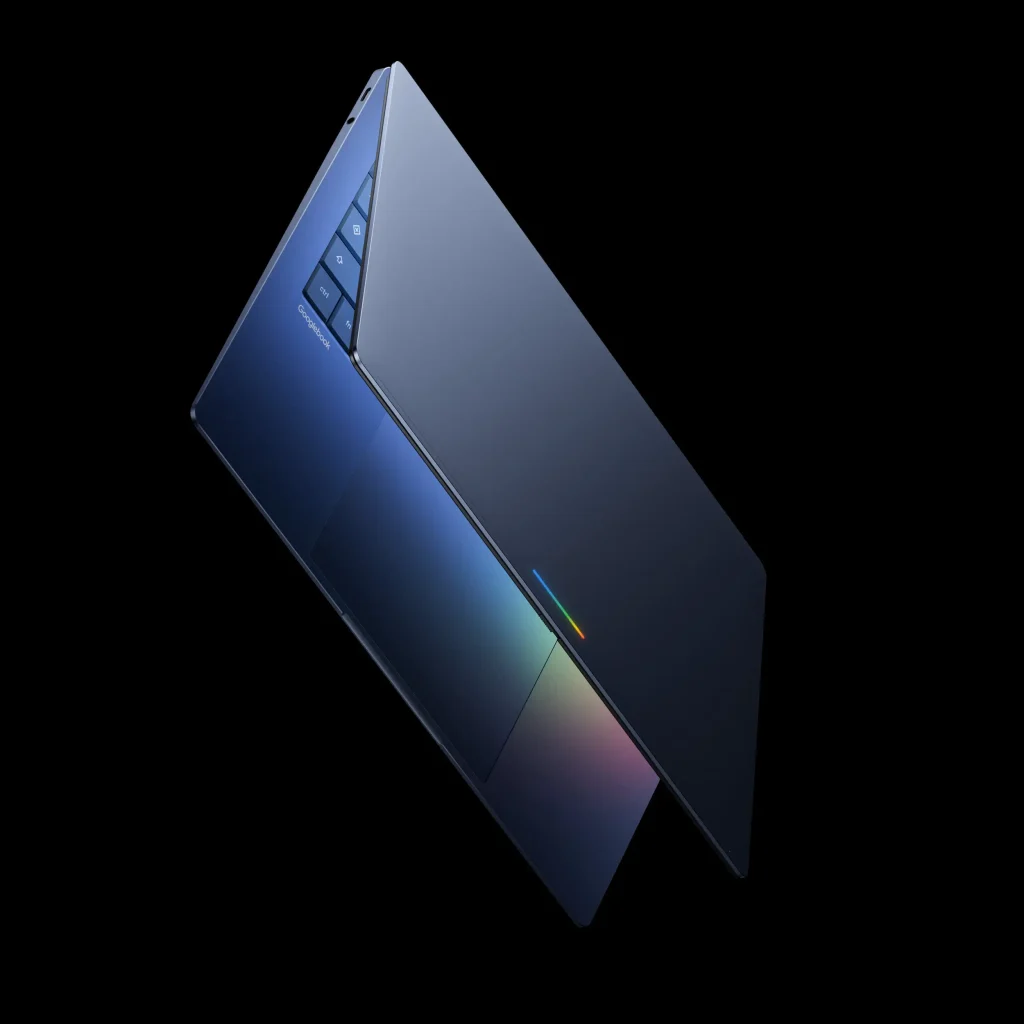
The most unexpected announcement of the day was “Googlebook,” a new category of device that Google is positioning as a Gemini-first reimagining of the laptop. The first Googlebooks are coming this fall, with Acer, Asus, Dell, HP, and Lenovo signed on as the first hardware partners.
The headline feature is Magic Pointer, which lets you highlight anything on your screen and instantly bring Gemini in to take action. There’s also tight integration with Android phones, including the ability to cast mobile apps onto the larger screen and a Quick Access file browser that surfaces everything on your phone directly from the laptop. The devices will have a premium build and what Google is calling a “glowbar.”
Android 17 is coming for creators
Google kept the Android 17 preview focused on two things: creative tools and quality of life.
Instagram is getting a serious upgrade on Android. The app is now fully optimized for Android tablets, and Google and Meta have brought Instagram capture and editing tools to Android as well, including ultra HDR video on higher-end devices and built-in video stabilization, along with Night Sight features. The Edits app is also getting smarter, with on-device AI that can upscale photos and videos with a single tap, plus audio separation that can pull out wind noise or isolate music independently. Adobe Premiere for Android is also arriving this summer.
Screen Reactions is a new feature that lets you record your face and your screen simultaneously, which will feel very familiar to anyone who’s been doing content creation on iOS.
On the sharing side, Quick Share’s AirDrop compatibility is expanding to Samsung, Oppo, OnePlus, Vivo, Xiaomi, and Honor, and in the meantime Quick Share can generate a QR code for instant sharing with iOS devices via the cloud.
The iOS-to-Android transfer process is also getting an overhaul, letting you wirelessly migrate passwords, photos, messages, apps, contacts, homescreen layout, and even your eSIM, arriving first on Galaxy and Pixel this summer.
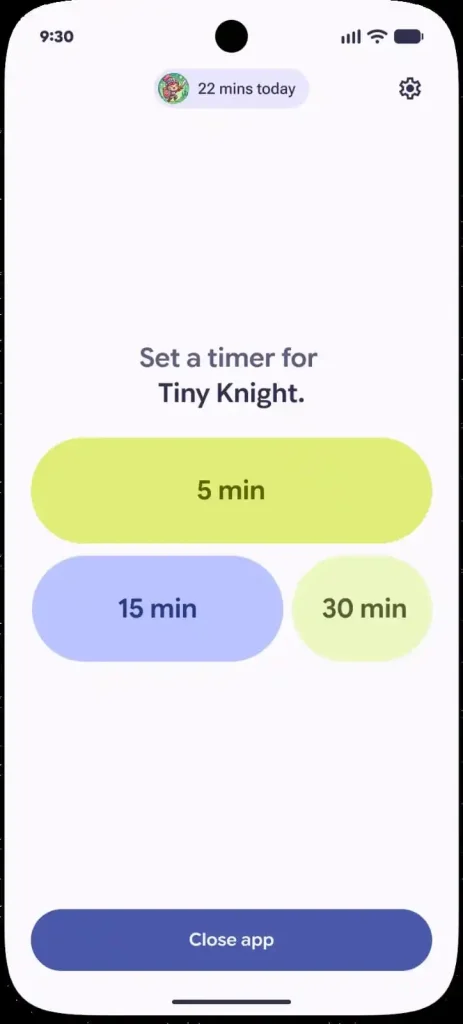
Digital Wellbeing is finally getting some new life with a feature called Pause Point. Instead of hard app lockouts or easy-to-dismiss timers, it offers a 10-second pause when you’ve hit your limit, surfacing a breathing exercise and asking “Why am I here?” It’s a subtle but genuinely thoughtful approach to screen time.
And then there are the emoji. Google is completely redesigning its default emoji set under the name Noto 3D, with three-dimensional designs rolling out to Pixel devices first later this year.
Android Auto gets a proper redesign
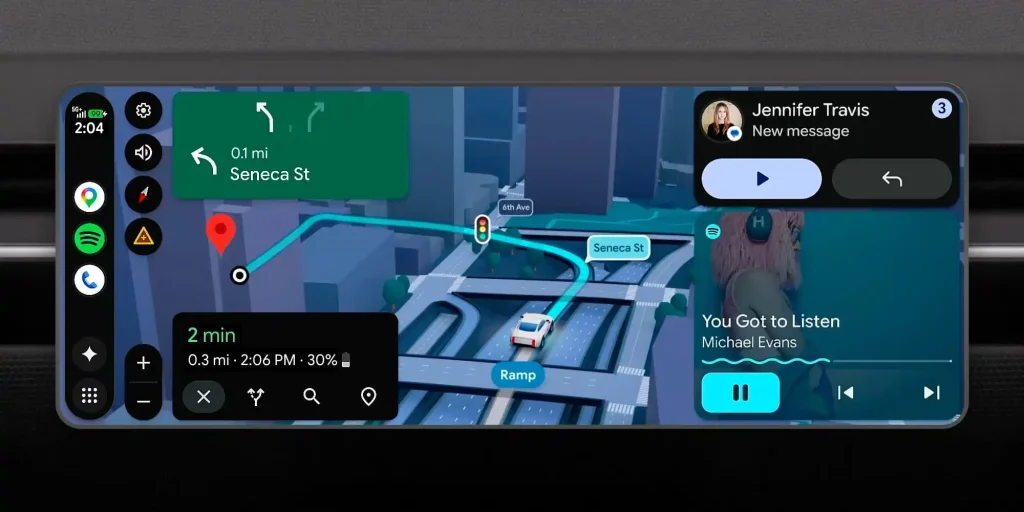
Android Auto is receiving a Material 3 Expressive redesign featuring expressive fonts, smooth animations, wallpapers, and widget support, with Google Maps Immersive Navigation delivering an edge-to-edge experience.
Supported vehicles from BMW, Ford, Genesis, Hyundai, Kia, and others are getting full HD video at 60 FPS, while a separate group of manufacturers including Mercedes-Benz, Volvo, and Renault are getting spatial sound with Dolby Atmos. Gemini Intelligence features will also come to Android Auto later this year, including the ability to handle app automation tasks like ordering food while you drive.
Google I/O officially kicks off on 19 May, where more AI and Android announcements are expected. But if today was the warm-up act, the main show is going to be something.