
A new World Bank report warns that Africa risks falling further behind in artificial intelligence as unreliable electricity, limited computing infrastructure, expensive connectivity and shortages of locally relevant data constrain the continent’s ability to participate in the global AI economy.
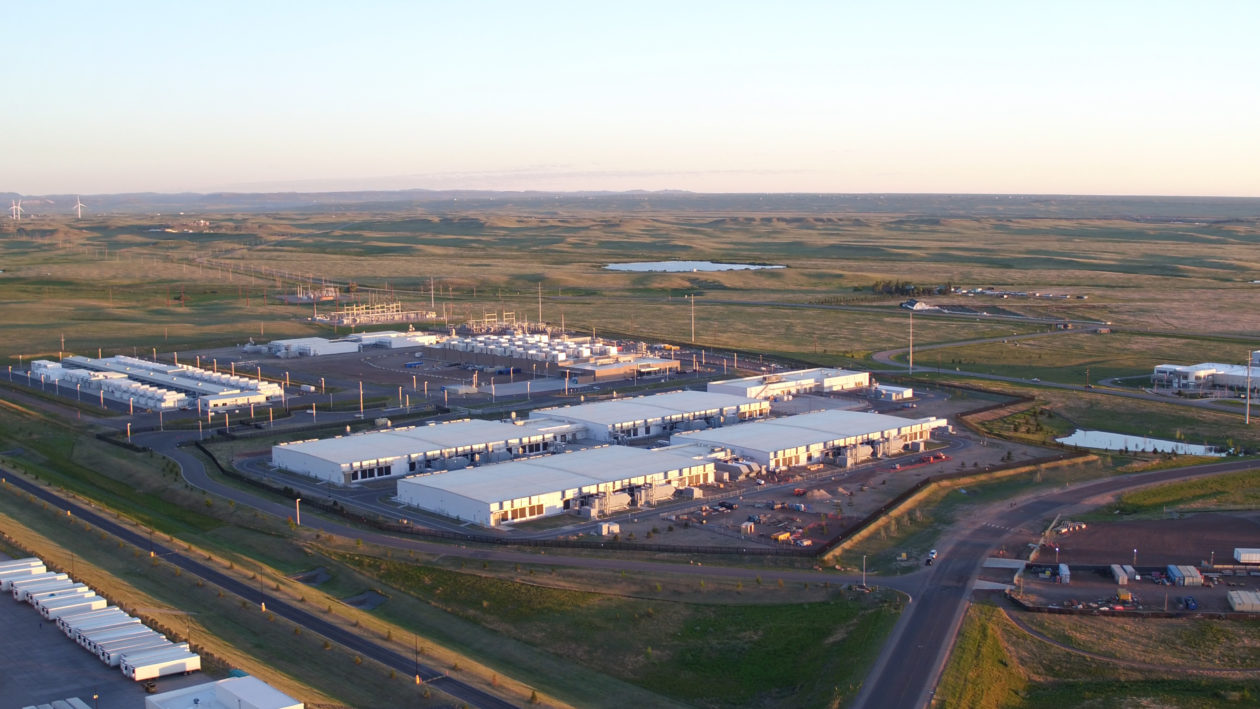
Africa is home to nearly 18% of the world’s population but accounts for just 0.6% of global data centre capacity, highlighting a significant infrastructure imbalance as artificial intelligence becomes increasingly important to economic growth, public services and business productivity.
The figures are contained in the World Bank’s October 2026 Africa Economic Update, titled Building AI-Readiness, released on October 6. The report examines how African economies can benefit from artificial intelligence despite substantial gaps in the infrastructure, skills and institutional capacity required to deploy the technology effectively.
According to the report, only about 5% of African data centres are considered AI-ready, while the continent contributes approximately 2% of the world’s AI training data. These limitations could leave African businesses, researchers and governments increasingly dependent on computing infrastructure and AI systems developed elsewhere.
The World Bank argues that Africa’s most immediate opportunity is not necessarily developing powerful AI models to compete with those produced by companies such as OpenAI, Google and Anthropic. Instead, countries should prioritise adopting and adapting affordable AI technologies that address local economic and social challenges.
Africa’s AI ambitions face an infrastructure problem
The global AI industry is becoming increasingly dependent on large data centres equipped with specialised processors, high-speed networking equipment and substantial electricity supplies.
These facilities provide the computing resources needed to train AI models and run the systems used by businesses and consumers.
Africa’s limited share of global data centre capacity presents a challenge for countries seeking to develop domestic AI industries.
Research published by the African Data Centre Association in February 2026 estimates that the continent has approximately 360 megawatts of active data centre capacity, with another 238 megawatts under construction and 656 megawatts planned.
However, the association warns that even these investments may only maintain Africa’s current share of global capacity rather than increase it, because data centre development is accelerating elsewhere.
The research also identifies electricity availability as a more significant constraint than connectivity in many African data centre markets.
For AI infrastructure, reliable electricity is particularly important because specialised computing equipment must operate continuously and requires substantial cooling.
Countries with unreliable power supplies face higher operating costs, potentially making them less attractive destinations for major computing investments.
The challenge extends beyond building data centres. AI development also requires specialised engineering skills, accessible cloud services, reliable telecommunications networks and regulatory frameworks that encourage investment.
Why Africa’s AI future may depend on smaller, more practical applications
Despite the infrastructure challenges, the World Bank believes African economies can benefit significantly from artificial intelligence without developing their own frontier AI models.
The report identifies affordable, locally adapted AI applications as the continent’s most promising near-term opportunity.
These include systems that help farmers identify crop diseases, support healthcare workers with clinical information, assist teachers with personalised learning and enable small businesses to automate administrative tasks.
Unlike the large models developed by major technology companies, some of these applications can operate with relatively modest computing requirements.
This distinction is particularly important for African markets where mobile phones remain the primary means of accessing digital services.
The World Bank argues that AI adoption should focus on improving productivity and supporting workers rather than assuming that automation must replace existing jobs.
What this means for Uganda
For Uganda, the findings raise questions about the country’s readiness to participate in an increasingly AI-driven digital economy.
Uganda has opportunities to deploy AI across agriculture, healthcare, education, financial services and public administration. However, successfully implementing these technologies will depend on more than access to international AI platforms.
Reliable electricity, affordable broadband, digital skills and access to appropriate computing infrastructure will determine how widely AI can be adopted.
The availability of locally relevant data is another consideration.
AI systems trained predominantly on information from developed economies may not adequately represent Uganda’s languages, agricultural practices, healthcare environments or business conditions.
Developing useful local applications will therefore require investment in datasets that reflect the country’s population and economic activities.
There is also an infrastructure policy question.
Rather than attempting to replicate the enormous AI data centres being developed in the United States and other advanced markets, Uganda could benefit from regional infrastructure partnerships, shared computing resources and investments that make existing AI technologies more accessible to local businesses.
These are potential policy approaches, rather than specific recommendations directed at Uganda in the World Bank’s report.
AI adoption could become an economic opportunity
The World Bank’s assessment comes as Sub-Saharan Africa’s economic growth is projected to increase from 4.1% in 2025 to 4.3% in 2026.
However, the institution warns that the recovery remains insufficient to substantially reduce poverty or create enough employment opportunities for the region’s rapidly expanding workforce.
AI could contribute to addressing these challenges by improving productivity, strengthening public services and supporting the development of new businesses.
The World Bank identifies Kenya, Nigeria and South Africa as the continent’s leading centres of AI activity, although adoption remains at an early stage across much of the region.
The institution also emphasises regional cooperation, including initiatives under the African Union’s Continental AI Strategy and the African Continental Free Trade Area, as potential mechanisms for expanding access to AI technologies.
Africa’s AI challenge goes beyond building data centres
The findings highlight a broader issue facing African economies as AI becomes embedded in everyday technology.
Countries that lack the infrastructure to develop advanced AI systems may still become substantial consumers of AI services. However, relying heavily on foreign computing infrastructure and technology providers could limit their control over costs, data and the development of locally relevant applications.
Building domestic capabilities will therefore require a combination of investment in infrastructure, technical education, research, data governance and policies that encourage private-sector innovation.
The World Bank’s central argument is that Africa does not need to compete directly with the world’s largest technology companies to benefit from AI.
Instead, the continent’s immediate priority should be creating the conditions under which businesses, governments and individuals can use existing AI technologies productively.
For Uganda and other emerging digital economies, the question is not simply whether AI will become available, but whether the infrastructure, skills and institutions needed to make it useful will develop quickly enough.
With Africa controlling just 0.6% of global data centre capacity, closing that gap will be a long-term undertaking. In the meantime, practical AI adoption could offer a more immediate route to economic value.